
Lobe vs Screw Blowers: Key Differences and How to Choose
Choosing between a lobe blower and a screw blower is not simply a matter of deciding which technology is better in absolute terms. The right choice depends on the required airflow, operating pressure, annual running hours, variations in demand and the expected energy costs throughout the equipment’s service life.
Both systems belong to the positive-displacement machine family and are among the most widely used industrial blower technologies for processes that require a continuous and controlled airflow. However, they move and compress air in different ways. This difference directly affects energy consumption, discharge temperature, noise, initial investment and total cost of ownership.
Before selecting a technology, it is therefore important to evaluate the complete process rather than focusing solely on the purchase price or the motor’s rated power.
How a Rotary Lobe Blower Works
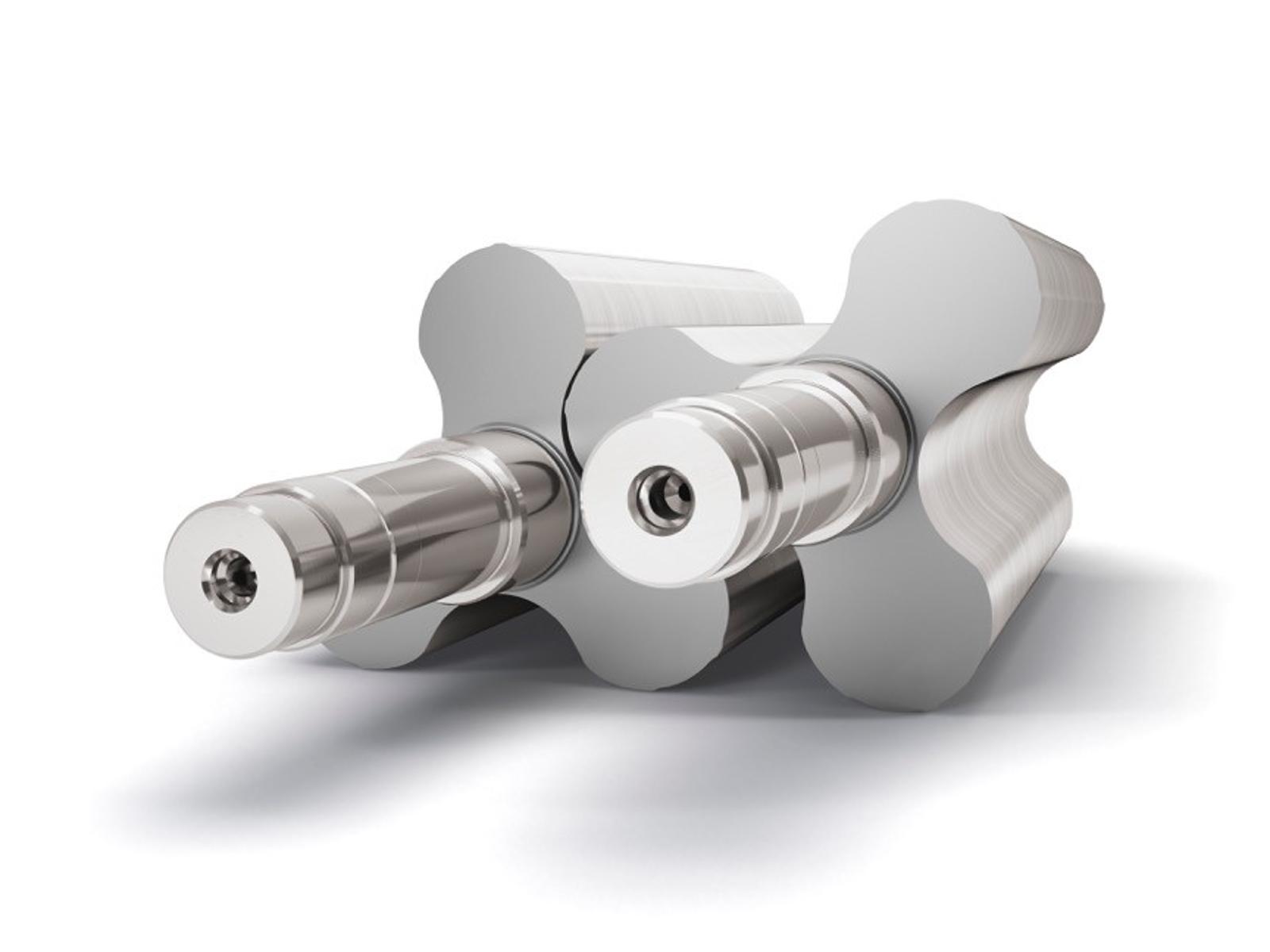
A rotary lobe blower, also commonly known as a Roots blower, uses two or three lobed rotors that rotate in opposite directions inside a casing.
As the rotors turn, they capture a defined volume of air at the inlet and transport it towards the outlet. The trapped volume is not significantly reduced inside the compression chamber.
Compression takes place mainly when the displaced air comes into contact with the pressure already present in the discharge pipe.
This operating principle results in a mechanically straightforward and robust machine that is suitable for a wide range of industrial processes.
Its typical characteristics include:
- Relatively simple construction.
- Strong reliability under demanding operating conditions.
- Stable airflow within its operating range.
- Straightforward and well-established maintenance.
- Generally lower initial investment.
- Ability to operate in both pressure and certain vacuum applications.
Rotary lobe blowers remain an effective solution when robustness, ease of maintenance and controlled capital expenditure are the main priorities.
RPG Lobe Blower Animation
To load this content, approve your cookie preferences and allow the required cookies.
How a Screw Blower Works
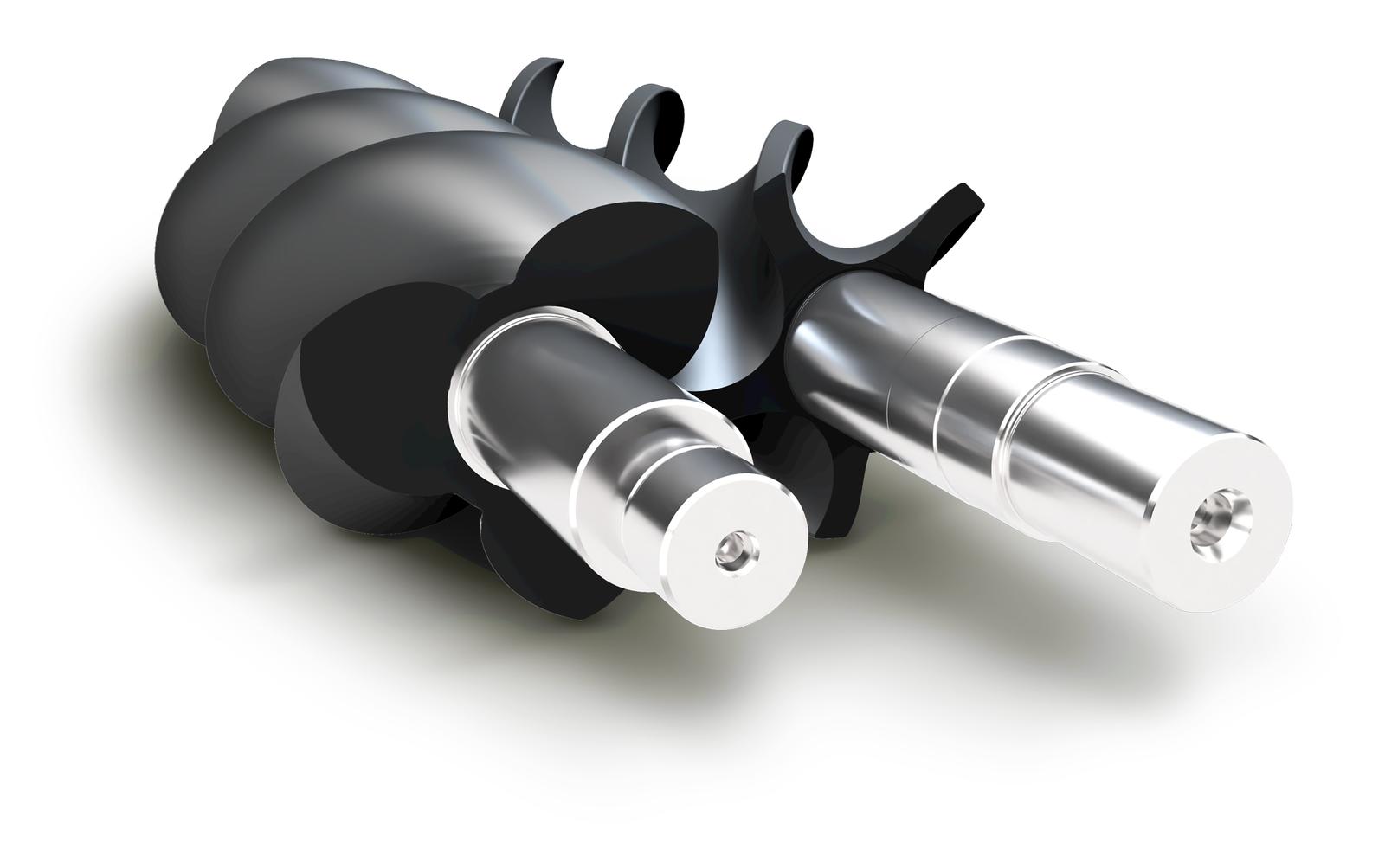
Screw blower technology uses two helical rotors, generally referred to as the male and female rotors, that rotate in a synchronised manner.
As the air moves through the rotors, the available volume is progressively reduced. Part of the compression therefore takes place inside the blower element before the air reaches the discharge pipe.
This internal compression allows the pressure generated by the equipment to more closely match the pressure required by the system. It reduces certain energy losses and creates a smoother flow, with lower pulsation and generally better-controlled discharge temperatures.
Its main characteristics include:
- Progressive internal compression.
- Smooth airflow with low pulsation.
- Strong energy performance during continuous operation.
- Lower noise and vibration levels.
- Ability to operate across a broad regulation range.
- Oil-free compression chamber in oil-free configurations.
This technology is particularly relevant in installations where electricity consumption accounts for a substantial share of operating costs.
Screw compressor animation EN
To load this content, approve your cookie preferences and allow the required cookies.
Lobe Blower vs Screw Blower: Quick Comparison
Criterion | Rotary lobe blower | Screw blower |
Compression principle | Positive displacement with mainly external compression | Progressive internal compression |
Initial investment | Generally lower | Generally higher |
Energy efficiency | Competitive at low pressures and in straightforward applications | Usually higher as pressure and operating hours increase |
Pulsation | More noticeable | Lower |
Noise and vibration | May require greater attenuation | Generally smoother operation |
Discharge temperature | May rise considerably with pressure | Usually better controlled |
Maintenance | Straightforward and widely understood | Predictable, but requires greater technical precision |
Continuous operation | Suitable | Particularly favourable |
Total cost of ownership | Competitive with limited operating hours | May be lower in energy-intensive installations |
The table reflects general tendencies. Actual performance depends on the equipment design, size, operating point and installation conditions.
1. Energy Efficiency
Energy efficiency is often one of the main criteria used to compare both technologies.
In a rotary lobe blower, the air reaches the outlet without being progressively compressed inside the chamber. When it comes into contact with the pressure in the network, a temporary backflow occurs, producing energy losses, pulsations and an increase in temperature.
A screw blower reduces these losses through internal compression. This advantage generally becomes more important when differential pressure rises, the equipment operates for many hours per year or electricity has a substantial impact on operating costs.
Technology alone, however, does not determine actual consumption. A rigorous comparison should consider at least:
- Total absorbed power of the complete blower package.
- Useful airflow delivered.
- Actual pressure at the point of use.
- Pressure losses across the installation.
- Motor and variable-speed drive efficiency.
- Consumption of auxiliary systems.
- Annual operating profile.
The most useful reference is specific power, which expresses the energy required to produce a defined unit of airflow. Comparing only the installed motor power can lead to inaccurate conclusions.
Some manufacturers report energy differences of approximately 30–37% in favour of certain screw blowers when compared with conventional rotary lobe equipment. These percentages should not be applied automatically to every installation. The actual saving must be calculated using the real operating points and the guaranteed performance data of each machine.
For a practical example, this industrial screw blower case study examines how replacing traditional positive-displacement blowers affected energy use, noise levels and operational reliability in a wastewater treatment installation.
2. Operating Pressure
Differential pressure is another decisive factor.
When the required pressure is relatively low, the efficiency difference between both technologies may be limited. Under these conditions, the lower initial investment and mechanical simplicity of a rotary lobe blower can provide an economically competitive solution.
As pressure increases, the losses associated with the external compression of a lobe blower become more significant. The internal compression of the screw blower can then reduce the work needed to achieve the same operating point.
For this reason, a blower should not be selected based on airflow alone. The same airflow delivered at two different pressures can lead to very different energy consumption and discharge temperatures.
The calculation should also include pressure losses generated by:
- Undersized pipework.
- Bends and changes in direction.
- Valves.
- Filters.
- Silencers.
- Diffusers.
- Heat exchangers and other process components.
An installation with excessive pressure losses may force the blower to operate at a higher pressure than the process actually requires.
3. Annual Operating Hours
Annual operating hours determine how much weight should be given to energy efficiency compared with initial investment.
In an intermittent application or one with limited operating hours, the energy savings generated by more efficient equipment may not be enough to compensate for a higher purchase price. In this scenario, a correctly sized rotary lobe blower may be the most rational optio
By contrast, when equipment operates continuously or for several thousand hours per year, even a moderate difference in absorbed power can result in substantial accumulated savings.
The comparison should include an estimated annual energy cost:
Annual energy cost = absorbed power × operating hours × electricity price
This calculation should be carried out for different load points rather than only at full-load or nominal conditions.
4. Variations in Air Demand
Many industrial processes do not require a constant airflow. Demand may change according to production levels, oxygen requirements, system pressure or the time of day.
Both rotary lobe and screw blowers can be fitted with variable-frequency drives to adapt their speed. However, the efficiency of each technology does not evolve in the same way throughout the complete regulation range.
To evaluate variable demand correctly, it is advisable to identify:
- Minimum airflow.
- Average airflow.
- Maximum airflow.
- Annual time spent at each operating point.
- Number of starts and stops.
- Pressure variations associated with the process.
The best solution is not always the machine with the lowest consumption at maximum capacity. A more efficient choice may be the unit that maintains favourable specific power at the operating points where it will run for most of the year.
It may also be advantageous to install several smaller units rather than one oversized machine. This allows the system to connect or disconnect individual blowers according to demand and keep the active units closer to their most efficient operating range.
5. Noise, Pulsation and Discharge Temperature
The cyclical movement of rotary lobes generates pressure pulsations. Modern equipment uses optimised designs, silencers and acoustic enclosures to reduce this effect considerably, but pulsation remains part of the technology’s operating principle.
In a screw blower, the airflow moves more progressively. This generally results in:
- Lower pressure fluctuations.
- Reduced vibration.
- Quieter operation.
- Lower mechanical stress on certain installation components.
- More moderate discharge temperatures under comparable conditions.
These differences may be particularly important when the blower is installed close to working areas, when acoustic restrictions apply or when the process is sensitive to airflow variations.
The final sound level nevertheless depends on the complete blower package, its rotational speed, acoustic enclosure, ventilation system and the characteristics of the plant room.
6. Maintenance and Reliability
Mechanical simplicity is one of the main advantages of rotary lobe blowers. It is a well-established technology with widely understood maintenance procedures.
Under normal operating conditions, maintenance usually includes checking:
- Gear and bearing lubricant.
- Inlet filters.
- Belts or couplings.
- Safety valves.
- Seals and gaskets.
- Temperature, vibration and noise.
- Silencer condition.
Screw blowers also use synchronised rotors that do not come into contact inside the compression chamber. Their maintenance can be limited and predictable, although the precision of their components and control systems makes specialist technical support advisable.
For both technologies, reliability depends heavily on correct sizing, regular condition monitoring and an appropriate predictive maintenance strategy for blowers. Operating continuously outside the intended range, at excessive temperatures or with inadequate filtration can reduce the service life of any blower.
7. Initial Investment and Total Cost of Ownership
The purchase price does not represent the complete cost of a blower.
A proper comparison should calculate the total cost of ownership, or TCO, including:
- Equipment purchase.
- Installation and commissioning.
- Electricity consumption.
- Preventive maintenance.
- Replacement parts.
- Potential production downtime.
- Acoustic insulation and ventilation systems.
- Expected service life.
- Residual value or replacement cost.
Rotary lobe blowers generally require a lower initial investment. Screw blowers may compensate for their higher purchase price through reduced energy consumption, particularly in continuous processes and at more demanding differential pressures.
The comparison should therefore cover a sufficiently representative period, such as five, ten or more years, depending on the expected lifespan of the installation.
When to Choose a Rotary Lobe Blower
A rotary lobe blower may be the most appropriate option when:
- Differential pressure is relatively low.
- Operation is intermittent or limited.
- Lower initial investment is a priority.
- Mechanical simplicity is an important requirement.
- Maintenance teams are already familiar with the technology.
- A robust solution is needed for demanding industrial conditions.
- The potential energy savings of another technology would not justify the additional investment.
It may also be a suitable option for expanding facilities that already use lobe blowers, provided that the new operating point remains within an efficient working range.
When to Choose a Screw Blower
A screw blower is generally particularly relevant when:
- The unit operates for many hours per year.
- Differential pressure increases the importance of energy consumption.
- Electricity represents a significant share of operating expenditure.
- Stable airflow with low pulsation is required.
- Noise or vibration restrictions apply.
- Demand varies and efficient regulation is needed.
- Lower discharge temperatures are desirable.
- The installation is being evaluated from a total-cost-of-ownership perspective.
This technology is commonly used in continuous processes such as wastewater treatment aeration, pneumatic conveying and other industrial applications where stability and efficiency are priorities.
How to Choose Between a Lobe Blower and a Screw Blower
Before requesting a technical comparison, it is advisable to collect the following information.
Required Airflow
Minimum, average and maximum airflow requirements should be specified, together with any expected future expansion.
Required Pressure
Pressure should be measured or estimated at the point of use, including the pressure losses generated throughout the installation.
Operating Profile
The analysis should include annual operating hours, periods at full load, part-load operating points and the number of starts and stops.
Gas Conditions
Humidity, temperature, dust, corrosive substances and gas composition may affect the required configuration.
Environmental Conditions
Altitude, room temperature and ventilation influence both blower capacity and cooling performance.
Acoustic Restrictions
The permitted sound level should be checked both inside and outside the blower room.
Maintenance Strategy
The availability of technicians, spare parts, maintenance windows and monitoring systems should also be evaluated.
Energy Cost
The current electricity price and its expected evolution directly affect the payback period.
With this information, it is possible to compare specific power, annual operating costs and total cost of ownership under realistic conditions.
Common Mistakes When Comparing Blower Technologies
One common mistake is to assume that a screw blower will always be the most efficient and cost-effective option. Although screw technology offers energy advantages at many operating points, an installation with limited running hours or low pressure may not justify the additional investment.
The opposite mistake is to regard rotary lobe blowers as obsolete technology. Their robustness, versatility and mechanical simplicity continue to provide clear advantages in many applications.
The following practices should also be avoided:
- Comparing only the motor’s rated power.
- Using maximum airflow as the only reference.
- Ignoring consumption at part load.
- Excluding auxiliary equipment from the calculation.
- Oversizing the blower to provide an excessive safety margin.
- Ignoring pressure losses across the network.
- Choosing solely on purchase price without calculating TCO.
- Applying generic energy-saving percentages.
A correct comparison must be based on performance curves, actual operating points and equivalent conditions.
There Is No Universally Better Technology
Rotary lobe and screw blowers respond to different operating requirements.
Lobe technology stands out for its robustness, simplicity and competitiveness in applications where energy demands are less intensive. Screw technology offers advantages when long operating hours, greater efficiency, low pulsation and more precise energy control are required.
The final decision should be based on how the complete system will perform throughout its service life. An analysis covering airflow, pressure, load profile, energy, maintenance and installation conditions will help identify the best balance between investment, performance and reliability.
At Pedro Gil, we analyse the actual conditions of each process to compare the available technologies and define the most suitable configuration. The objective is not to select the machine with the best isolated performance figure, but to identify the solution that delivers the required airflow with controlled energy consumption and sustainable operating costs.
Frequently asked questions about lobe vs screw blowers
Under equivalent conditions, a screw blower generally consumes less energy when differential pressure and operating hours are high. The actual result nevertheless depends on the model, operating point and load profile.