Field Maintenance vs Dedicated Service Centre Maintenance: Benefits, Challenges and How to Choose
In industrial environments, maintenance is not just a technical requirement. It is a key factor in productivity, operational continuity and long-term equipment reliability. For machines such as blowers, compressors and vacuum pumps, choosing the right type of maintenance can make a significant difference in downtime, repair quality and total operating cost.
One of the most common decisions faced by maintenance and plant managers is whether a service intervention should be carried out directly on site or at a specialized workshop. Both options have clear advantages, but they are not designed for the same situations.
Field maintenance, also known as on-site maintenance, is usually the preferred choice for inspections, diagnostics, preventive service and interventions that can be completed without removing the equipment from the installation. Dedicated service centre maintenance, sometimes referred to as workshop maintenance, is better suited for more complex repairs, overhauls, internal inspections and performance testing under controlled conditions.
Understanding the benefits, challenges and differences between these two approaches helps companies make better decisions, reduce unnecessary downtime and extend the service life of critical industrial equipment.
What is field maintenance?
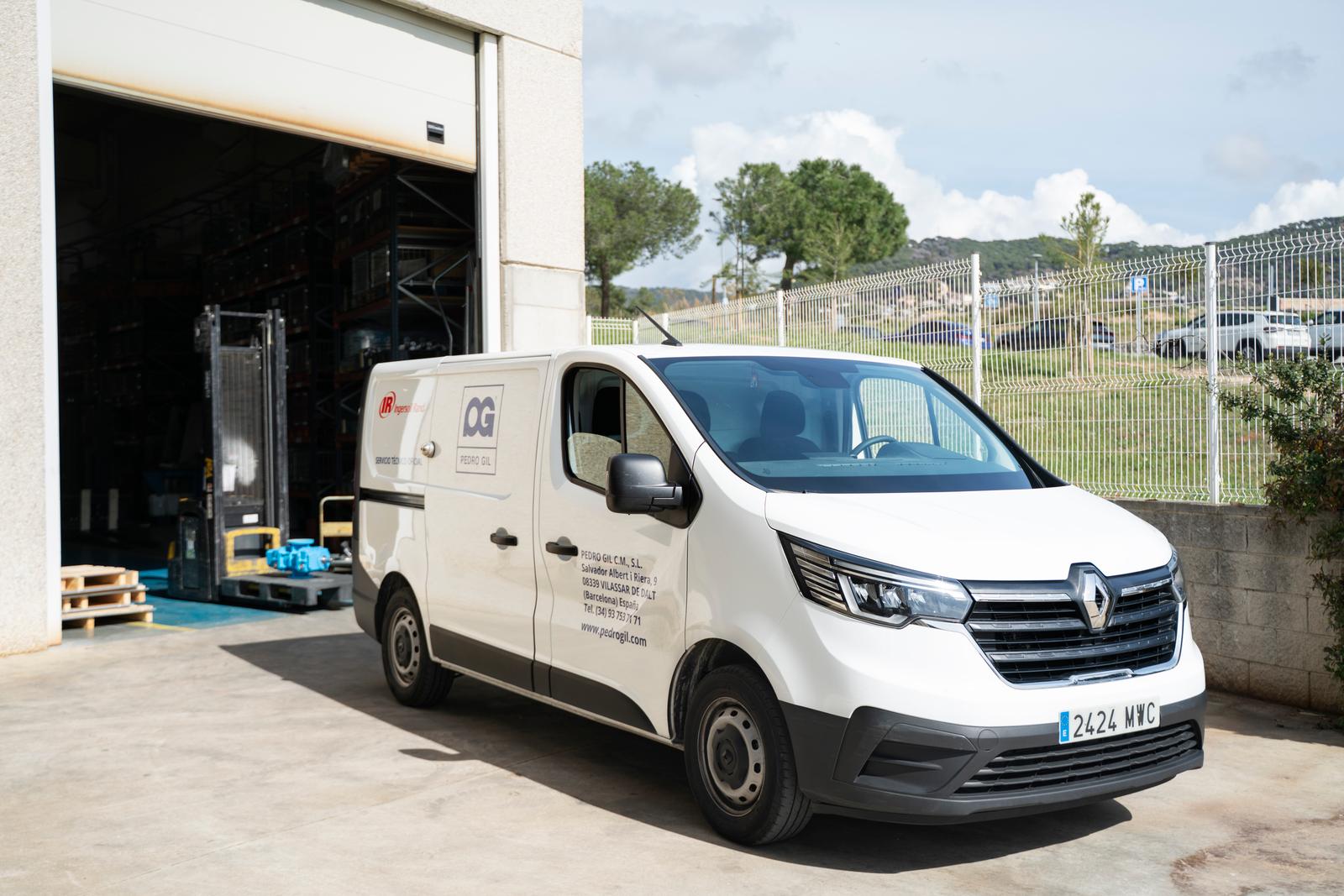
Field maintenance refers to any technical service performed directly at the customer’s facility. Instead of sending the equipment to a workshop, specialized technicians travel to the plant to inspect, diagnose, adjust or repair the machine in its actual operating environment.
This type of intervention is especially useful when the equipment is difficult to move, when a fast diagnosis is needed or when the maintenance task does not require complete disassembly.
In the case of blowers, compressors and vacuum systems, field maintenance can be a art of an industrial after-sales service include:
- Visual and mechanical inspections.
- Operating checks.
- Vibration and temperature monitoring.
- Oil and filter replacement. ( Service and Oil Kits)
- Adjustment of operating parameters.
- Preventive maintenance tasks.
- Initial fault diagnosis.
- Commissioning and calibration.
- Minor repairs or component replacement.
One of the main benefits of field maintenance is that technicians can evaluate the equipment under real working conditions. This makes it easier to detect problems linked to the installation, operating profile, environmental conditions or process requirements.
What is dedicated service centre maintenance?
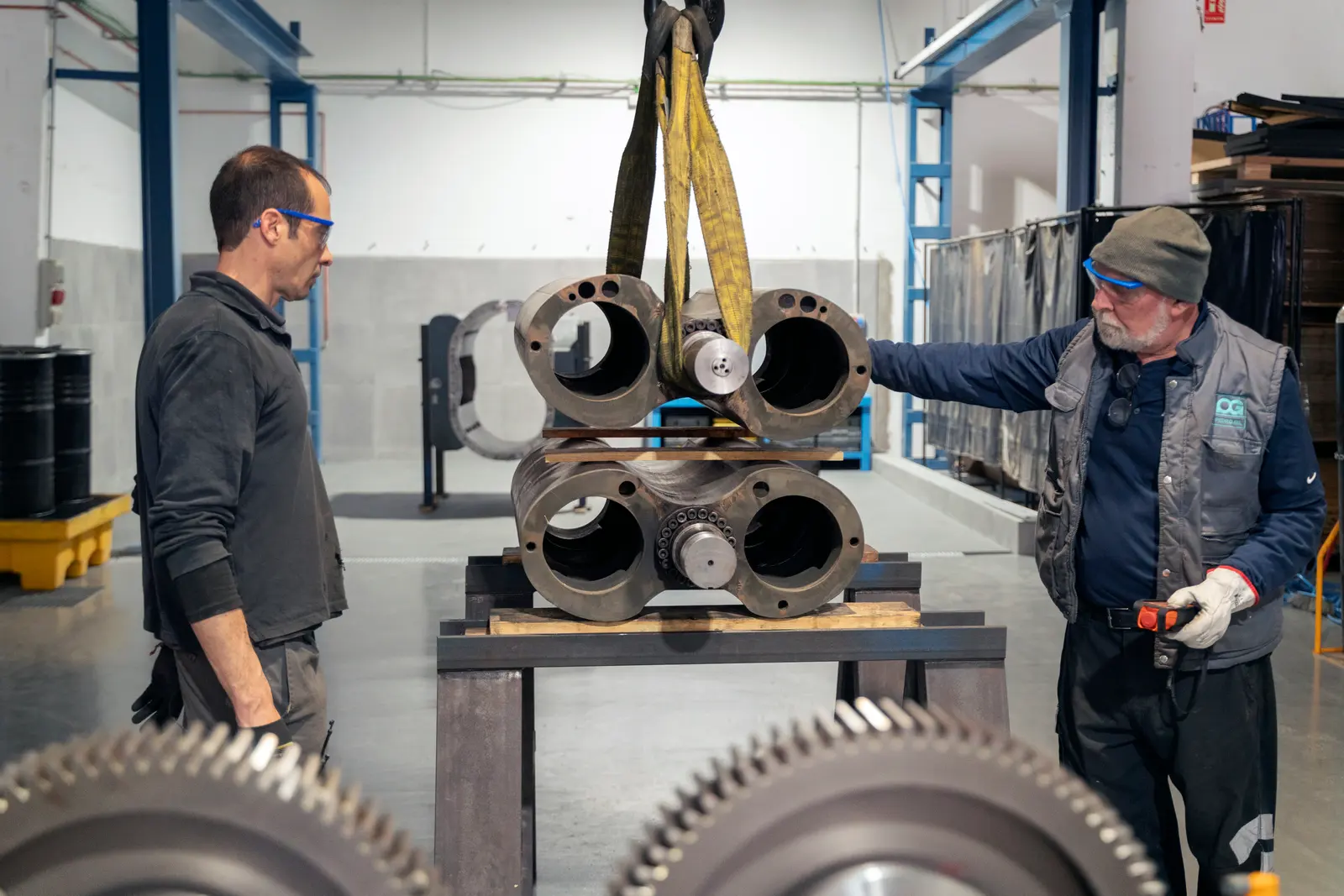
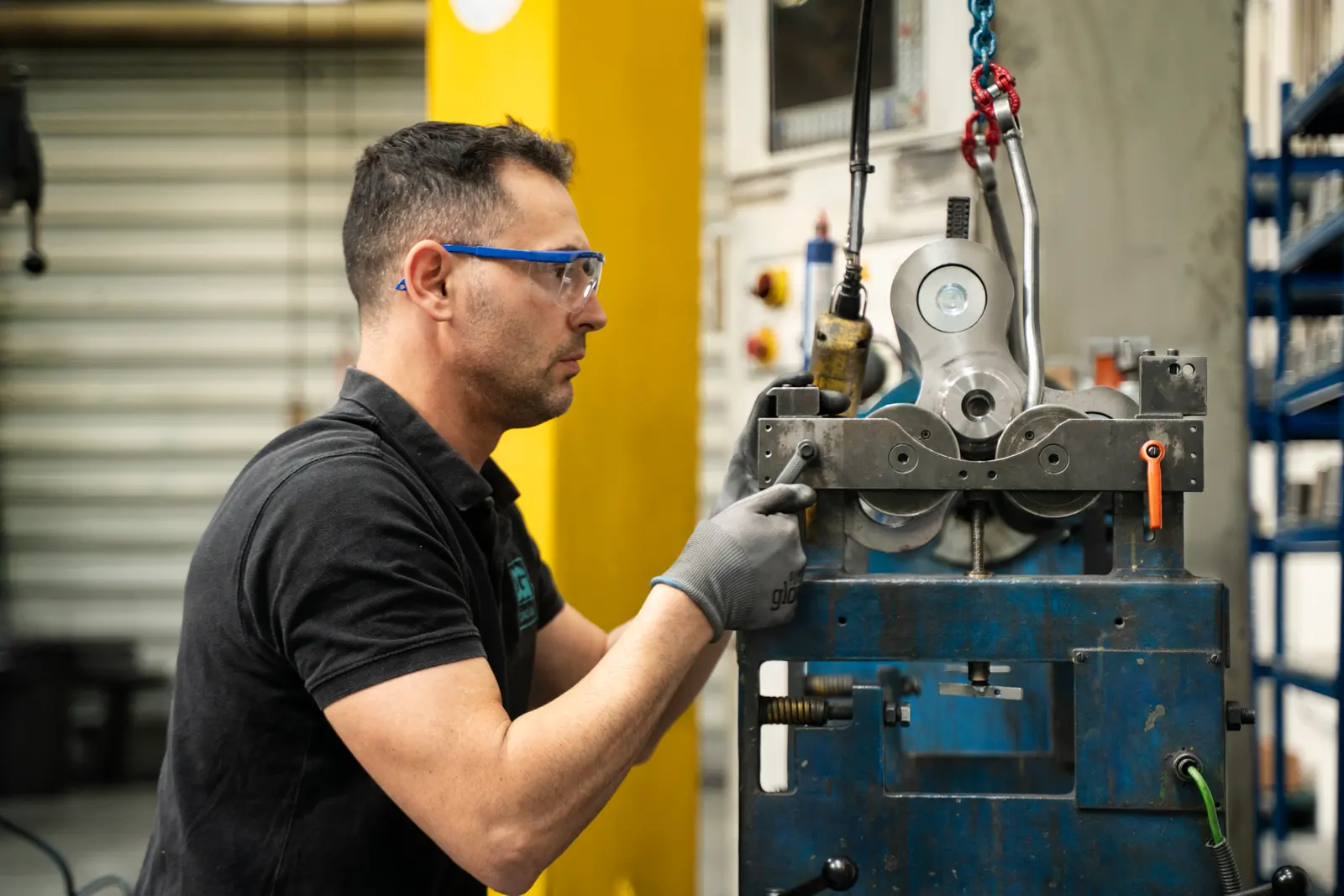
Dedicated service centre maintenance is carried out in a specialized service facility equipped with the tools, test benches and technical resources needed for more complete interventions. In this case, the equipment is removed from the plant and sent to the workshop for inspection, repair, reconditioning or overhaul.
This approach is recommended when the intervention requires deeper access to internal components or when the equipment needs to be tested in controlled conditions before returning to operation.
Dedicated service centre maintenance may include:
- Complete disassembly.
- Internal inspection.
- Cleaning of critical components.
- Replacement of worn or damaged parts.
- Rotor inspection and balancing.
- Bearing replacement.
- Sealing system checks.
- Reassembly according to technical specifications.
- Performance testing before delivery.
- Technical reporting and recommendations.
For blowers, compressors and vacuum pumps, maintenance at a dedicated service centre maintenance is often the most reliable option when there are signs of internal wear, abnormal noise, vibration, loss of efficiency or recurrent failures.
Although this option may involve additional logistics and planning, it provides a more complete view of the equipment’s condition and allows repairs to be performed under controlled technical standards
Main differences between field and dedicated service centre maintenance
Both types of maintenance are valuable, but each one responds to different operational requirements. The choice depends on the condition of the equipment, the urgency of the intervention, the complexity of the repair and the level of testing required.
Criteria | Field maintenance | Dedicated service centre maintenance |
Location | Customer’s facility | Specialized service facility |
Best suited for | Inspections, diagnostics, preventive service and minor repairs | Deep repair, overhaul, reconditioning and bench testing |
Downtime impact | Usually shorter for minor interventions | May require more time but allows deeper restoration |
Equipment access | Limited by plant conditions | Full access to internal components |
Testing possibilities | Functional checks under real operating conditions | Controlled performance testing |
Logistics | No need to move the equipment | Equipment must be transported |
Repair scope | Limited to accessible tasks | Suitable for complex mechanical work |
Documentation | Service report and recommendations | Full technical report and performance validation |
In many cases, the most effective maintenance strategy combines both approaches. A field inspection may identify whether the equipment can continue operating with minor adjustments or whether it should be sent to a dedicated service centre for a more complete intervention.
Benefits of field maintenance
Faster response for operational issues
When a machine shows signs of abnormal performance, field maintenance allows technicians to assess the situation quickly. This is particularly useful when production depends on the continuous operation of a blower, compressor or vacuum system.
A fast on-site diagnosis can help determine whether the issue is related to the equipment itself, the installation, the operating conditions or the process.
Less logistics and equipment movement
One of the clearest advantages of field maintenance is that the equipment does not need to be removed from the plant. This reduces transport requirements, handling risks and administrative complexity.
For large or integrated systems, avoiding unnecessary movement can be a major benefit, especially when the intervention is preventive or limited in scope.
Well suited to preventive maintenance
Field service is ideal for routine maintenance tasks designed to keep the equipment in stable operating condition. These actions may seem simple, but they are essential to prevent premature wear and unexpected downtime.
Preventive field maintenance may include checking lubrication, replacing filters, reviewing operating temperatures, monitoring vibration levels and confirming that the machine is working within the expected parameters.
Assessment under real operating conditions
A machine may behave differently in a dedicated service centre than it does in the plant. Field maintenance allows technicians to evaluate the equipment while it is connected to the actual system, under real load and environmental conditions.
This is particularly valuable when performance problems are linked to installation factors such as ventilation, pipework, pressure drops, air quality, process demand or incorrect operating settings.
Reduced disruption for minor interventions
When the maintenance task is straightforward, field service can reduce the impact on production. Minor adjustments, inspections or component replacements can often be completed without long interruptions or complex planning.
For plants where availability is critical, this can help maintain operational continuity while still protecting equipment reliability.
Possible challenges of field maintenance
Although field maintenance offers a fast response and allows technicians to assess the equipment under real operating conditions, the scope of the intervention may be limited by the plant environment.
Restricted access around the machine, safety requirements, production activity and the availability of lifting equipment or specialized tools can make certain repairs difficult to perform on site. Field interventions may also offer fewer possibilities for complete disassembly, precision balancing or controlled performance testing.
For this reason, field maintenance is particularly effective for inspections, diagnostics, preventive tasks and minor repairs, but a dedicated service centre may be required when the equipment needs deeper mechanical work or complete validation.
Benefits of dedicated service centre maintenance
More complete diagnosis
Maintenance at a dedicated service centre allows technicians to inspect the equipment in much greater detail. Once the machine is disassembled, internal wear, damage or contamination can be detected more accurately.
This is especially important when symptoms such as vibration, abnormal noise, overheating or efficiency loss indicate that the problem may be inside the machine.
Better conditions for complex repairs
Some repairs cannot be carried out properly in a plant environment. A dedicated service centre provides the space, tools and controlled conditions required for mechanical work that demands precision.
This includes internal component replacement, rotor inspection, balancing, sealing checks and complete reassembly according to technical specifications.
Performance testing before delivery
One of the main advantages of dedicated service centre maintenance is the possibility of testing the equipment before it returns to the customer’s facility. These tests help verify that the machine performs correctly after the repair or overhaul.
For critical industrial equipment, this step is particularly valuable because it reduces the risk of reinstalling a machine that has not been fully validated.
Suitable for overhauls and reconditioning
When the objective is not just to fix a specific issue but to restore the equipment’s condition, workshop maintenance is usually the best option.
A complete overhaul can extend the useful life of the machine, improve reliability and recover part of the original performance. This can be especially relevant for equipment that has been operating for many years or under demanding process conditions.
Higher technical control and traceability
Dedicated service centre interventions allow every step of the repair process to be documented more thoroughly. From the initial inspection to the final test, technicians can record findings, replaced components, measurements and recommendations.
This level of traceability is important for maintenance planning, internal audits and future decision-making.
Possible challenges of dedicated service centre maintenance
Maintenance at a dedicated service centre provides greater technical control, but it normally requires more operational planning. The equipment must be disconnected, removed from the installation, prepared for transport and sent to the service facility.
This process may increase logistics requirements and extend the total intervention time. For critical equipment, the company may also need to arrange a temporary replacement unit or coordinate the repair with a scheduled production shutdown. Transport, lifting operations and reinstallation must also be planned correctly to avoid additional delays.
However, these additional requirements are often justified when the equipment needs complete disassembly, an overhaul, internal component replacement or performance testing under controlled conditions.
The decision should therefore consider whether the technical benefits of a service centre intervention outweigh the operational impact of temporarily removing the equipment from the plant.
When should you choose field maintenance?
Field maintenance is usually the right choice when the equipment can be inspected or serviced without complete disassembly. It is also recommended when speed is essential and the first priority is to understand the cause of a problem.
You should consider on-site maintenance when:
- The equipment needs a routine inspection.
- A preventive maintenance task is due.
- The machine requires an initial diagnosis.
- The issue appears to be minor or external.
- The equipment is difficult to move.
- The intervention can be completed safely in the plant.
- The objective is to minimize immediate disruption.
- Operating conditions need to be assessed in the real installation.
- The plant needs quick technical support before deciding on a larger repair.
Typical examples include inspections, calibration, commissioning support, oil or filter replacement, checking operating parameters and identifying the origin of abnormal behavior.
Field maintenance is also useful as a first step before deciding whether a more complete workshop intervention is necessary.
When should you choose dedicated service centre maintenance?
Dedicated service centre maintenance is the better option when the intervention requires deeper inspection, more advanced repair work or controlled performance testing.
You should consider workshop maintenance when:
- There are signs of internal wear.
- The equipment shows abnormal vibration or noise.
- There is a significant loss of performance.
- The machine has suffered mechanical damage.
- The repair requires complete disassembly.
- A full overhaul or reconditioning is needed.
- The equipment must be tested before being returned to service.
- Previous on-site interventions have not solved the problem.
- The machine has reached a critical point in its lifecycle.
Dedicated service centre maintenance is especially recommended when reliability must be restored before the equipment is put back into operation. Although the process may require more planning, it often provides a more durable and technically complete solution.
Practical decision guide: field or dedicated service centre maintenance?
Choosing between field maintenance and dedicated service centre maintenance is easier when the decision is based on the type of issue, the scope of the intervention and the expected outcome.
Situation | Recommended option |
Routine inspection | Field maintenance |
Preventive maintenance | Field maintenance |
Initial fault diagnosis | Field maintenance |
Commissioning or calibration | Field maintenance |
Oil, filter or service kit replacement | Field maintenance |
Minor operating adjustment | Field maintenance |
Abnormal vibration | Field diagnosis, followed by service centre maintenance if required |
Recurrent overheating | Field diagnosis, followed by service centre maintenance if internal causes are suspected |
Internal wear suspicion | Dedicated service centre maintenance |
Major mechanical damage | Dedicated service centre maintenance |
Complete overhaul | Dedicated service centre maintenance |
Reconditioning of old equipment | Dedicated service centre maintenance |
Need for performance testing | Dedicated service centre maintenance |
Equipment restoration before reinstallation | Dedicated service centre maintenance |
The most effective approach is not always choosing one option over the other. In many cases, the process starts with a field diagnosis and continues with a dedicated service centre maintenance if the technical findings justify a deeper intervention.
How maintenance strategy affects equipment lifetime and efficiency
Maintenance decisions have a direct impact on equipment lifetime, energy efficiency and total cost of ownership. A blower, compressor or vacuum pump that operates with worn components, incorrect settings or insufficient lubrication may continue running for some time, but its efficiency and reliability will gradually decline.
Preventive and predictive maintenance help detect problems before they become critical.
This reduces the risk of unexpected failures and allows companies to plan interventions at the most convenient time.
An effective maintenance strategy should consider:
- The criticality of the equipment.
- The operating hours.
- The process conditions.
- The availability of spare parts.
- The cost of downtime.
- The age and condition of the machine.
- The possibility of using replacement equipment during repair.
- The need for performance validation after service.
Field maintenance helps monitor equipment in real operating conditions and solve minor issues before they escalate. Dedicated service centre maintenance provides the technical
depth needed to restore performance when the problem is more advanced.
Together, both approaches support a more reliable and efficient lifecycle management strategy.
Common mistakes when choosing a maintenance option
Selecting the wrong maintenance approach can lead to unnecessary costs, longer downtime or incomplete repairs. Some of the most common mistakes include:
Delaying workshop intervention for too long
Trying to solve an internal mechanical problem only through repeated on-site interventions may increase the risk of further damage. If the equipment shows persistent vibration, noise or performance loss, a deeper inspection at a dedicated service centre may be necessary.
Sending equipment to the dedicated service centre too early
Not every issue requires disassembly or transport. In some cases, the cause may be related to the installation, process conditions or external components. An initial on-site diagnosis can avoid unnecessary logistics.
Ignoring operating conditions
A repair may solve the immediate problem, but if the installation conditions remain unchanged, the issue can reappear. Ventilation, filtration, pressure settings, load profile and maintenance frequency should always be reviewed.
Using non-original spare parts
Spare parts quality has a direct impact on reliability, safety and performance. Using original components helps maintain compatibility and preserve the technical characteristics of the equipment.
Treating maintenance as a reactive task
Maintenance should not begin only when a machine fails. A planned approach helps reduce unexpected downtime and allows interventions to be coordinated with production needs.
How Pedro Gil supports both maintenance needs
Pedro Gil supports industrial customers with both field technical assistance and maintenance at dedicated service facilities for blowers, compressors and vacuum systems.
Depending on the condition of the equipment and the type of intervention required, Pedro Gil’s technical team can help assess the most appropriate solution: a direct service visit at the customer’s facility, a remote diagnosis, a planned preventive intervention or a complete workshop repair.
At its Barcelona facilities, Pedro Gil carries out specialized repair and maintenance processes that may include equipment reception, technical evaluation, quotation, repair, replacement of worn components, cleaning, balancing, assembly and final performance testing before delivery.
This combination of field service and dedicated service centre capability allows companies to reduce downtime, improve reliability and extend the service life of their industrial equipment.
Pedro Gil also supports maintenance planning through service programs, original spare parts, service kits, oil kits and technical assistance adapted to the real operating conditions of each installation.
Conclusion: choosing the right maintenance option
There is no universal answer to the question to whether field maintenance or maintenance at a dedicated service centre is the better option. The right choice depends on the equipment condition, the type of failure, the urgency of the intervention and the level of technical work required.
Field maintenance is ideal for inspections, preventive service, initial diagnosis and minor interventions. It provides speed, convenience and direct insight into the real operating environment. However, plant conditions may limit the scope of complex repairs and controlled testing.
Dedicated service centre maintenance is better suited to complex repairs, internal inspections, overhauls and performance validation. It offers greater technical control and is often the best option when the objective is to restore reliability and extend equipment life.
For industrial companies, the most effective strategy is to use both approaches intelligently. A timely on-site inspection can prevent failures, while a well-planned workshop intervention can restore critical equipment before the problem becomes more costly.
Need help deciding which maintenance option is right for your blower, compressor or vacuum pump? Contact Pedro Gil’s after-sales team and request specialized technical support for your industrial equipment.